
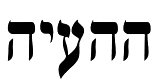
Angel no. 12
Haha'iyah
«The great energy of my soul stands against deception»
Haha'iyah accompanies the period from 16 to 21 May and belongs to the Cherubim. Its motto is «The great energy of my soul stands against deception». In this symbolic portrait, the two hes evoke a strong drive to bring clarity, justice and beauty where confusion prevails. The ayin, by contrast, represents what stagnates and makes it difficult to see a different possibility.
You may feel a strong desire to open a path and help others believe in something better. Recognising a problem is not enough for you: you want to counter it with a presence, a work or a concrete action. This disposition can become a great strength, especially when it finds someone to reach rather than remaining only an ideal to defend.
The main risk is pessimism. After disappointment, you may convince yourself that the world is too treacherous to keep making an effort. You withdraw to preserve what you have achieved but find it increasingly hard to enjoy. Protection becomes a state of siege in which every new opportunity seems above all to contain danger.
Distrust can also turn towards yourself. You question a feeling before expressing it, an ability before using it and an idea before giving it form. In love you postpone declaring yourself; in art, criticism becomes so severe that it prevents you from finishing. Seeking clarity thus turns into the need for a certainty no experience can offer.
John Paul II represents continuity of action and presence in this portrait. Honoré de Balzac brings the same movement into narrative work, exploring countless figures and contradictions in society. Lázaro Cárdenas evokes commitment to public and social initiatives. In all these examples, strength finds a task instead of remaining occupied solely with self-defence.
Frank Capra offers the brightest form of this contrast. In It's a Wonderful Life, Mr. Deeds Goes to Town, You Can't Take It with You and Pocketful of Miracles, trust does not ignore difficulties: it encounters them and seeks a way to keep them from having the final word. Creative work becomes a presence capable of encouraging the audience.
Another limitation is the tendency to divide everything into yes or no, good or evil. When you are building something, this clarity supports decision. If suspicion and distrust prevail, however, you may see evil as so widespread that it justifies harshness and imposition. The desire to improve others' lives becomes an attempt to force them into your ideal.
Bertrand Russell and Malcolm X evoke moments of strong opposition followed by an ability to revise a position in this portrait. Ayatollah Khomeini, by contrast, represents the passage from opposition to a power that treats dissent as an obstacle to suppress. These examples show the risk of confusing the conviction that you are doing good with the right to decide everything for others.
The same dynamic can appear quietly at home or at work. Belittling those who do not share a choice, suspecting every intention and denying credit for improvement make the environment you want to change heavier. Personal tension can also grow when every impulse is stopped by doubt. Prolonged stress may weigh on sleep, mood and everyday wellbeing.
Haha'iyah's direction is to practise concrete trust. Choosing people who know how to encourage, cultivating an ability and recognising a positive effect of your contribution allow you to see beyond the problem. You can help someone feel better in a situation without feeling responsible for their happiness or believing you control their fortune.
Doubt remains useful when it makes a choice more careful. It becomes an obstacle when it prevents every experience. Giving form to a work, finishing part of it and sharing it allow your strength to return to the world without waiting for every possibility of error to disappear.