
Angel no. 41
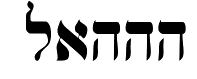
Hahahe'el
«My soul loses itself within itself»
Hahahe'el belongs to the Virtues and accompanies the period from 14 to 18 October. The motto «My soul loses itself within itself» introduces a restless portrait: you readily move beyond ideas and achievements, but struggle to find something that continues to seem large enough.
Your gift is to see the limits of what is taken as definitive. A thought, an ideal or an image of yourself may interest you intensely and then seem insufficient. Friedrich Nietzsche represents this movement of searching and moving beyond: his work evokes a critical distance from convictions in which others find rest.
Much depends on how you regard those who remain attached to those convictions. You may feel tenderness and want to guide them towards broader understanding. Italo Calvino, especially in Six Memos for the Next Millennium, evokes this calling to convey clearly what you have learnt. Or you may despise other people's naivety and enjoy dismantling their certainties, even to the point of using their trust for personal advantage.
The abilities are the same: you communicate well, argue clearly, inspire trust and know how to organise a strategy. You can build a path that makes someone freer or a situation that makes them dependent on you. Recognising this choice is essential, because skill in persuasion does not prove that your intentions are always good.
The main risk is excessive self-confidence. You may accelerate, take a bold decision and only afterwards feel its weight. Confidence turns into fear, as though you suddenly lost control of the speed you have reached. At that point, you may seek punishment or stop protecting yourself instead of correcting your course.
Oscar Wilde brings the relationship between nonconformity, public exposure and vulnerability into this portrait. The persecution he suffered shows how a hostile environment can harm someone who lives outside its norms. The courage to express a difference also needs protection, support and attention to practical circumstances.
You may treat your body as an instrument that must follow your mind, ignoring tiredness and limits. Eugene O'Neill, Montgomery Clift and Mickey Rourke appear in connection with excess. For you, the practical point is to recognise exhaustion and address it, instead of turning to alcohol, substances or ceaseless activity as a way to keep pushing beyond it.
Inconstancy creates another cycle. While you are doing something, you fear that what really matters is happening elsewhere. This alertness makes you an excellent discoverer of new things, but can leave you and those close to you dissatisfied. A friend or partner may tire of always feeling less interesting than the next possibility.
Loneliness may then drive you into hasty relationships, sustained by the belief that you can leave without consequences. When disappointment comes, you may grow bitter, manipulative and unwilling to acknowledge your mistakes. Persistent suffering deserves support: you do not have to prove you can overcome everything through intelligence alone.
An ideal broad enough to require consistency and discipline can help you. Luciano Lama and Norberto Bobbio evoke political and civic commitment; Haziel, the methodical study and communication of the Qabbalah; Eisenhower, service to a collective purpose. You do not need to find an infallible leader: you need a direction you are willing to examine even when enthusiasm fades.
Dino Buzzati represents turning restlessness into stories instead of reducing it to inescapable boredom. Your direction is to keep searching without destroying every source of support: accepting guidance, admitting a mistake and caring for yourself make freedom more sustainable.