
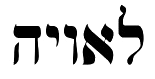
Angel no. 17
La'awiyah
«Through the alef, I cross the boundary»
In La'awiyah's symbolic portrait, the desire to go beyond what you know begins in the heart. Like May's La'awiyah, angel 11, you are connected to the threshold between visible and invisible. In June, this movement is characterised above all by tenderness: you want to be loved, while the May portrait places greater emphasis on the desire to be admired. Your quality is a tender curiosity: you want to discover what someone hides, the possibilities they neglect and the desires they cannot yet express. Even success can become a way of reaching others' hearts.
You may feel more at home in imagination, dreams, stories and inner territories than in everyday habits. The threshold is the central image of your journey: it separates what you already know from a reality still to explore. It can take the form of psychology, spiritual inquiry, a distant culture, theatre, the sea or space. What matters is more than novelty; it is the connection that moves you to seek it.
If this calling finds no space, you may pursue aims unlike you and live with a sense of dullness. Change can come late too, when an encounter or passion makes concrete a world previously only sensed. You do not need to disown everything you have lived: you need to recognise the direction that truly engages you.
Dante Alighieri represents this passage through the poetic journey into the invisible, supported by Virgil and the bond with Beatrice. Che Guevara evokes emotional involvement in an undertaking shared with Fidel Castro; Stan Laurel the artistic partnership with Oliver Hardy. In these examples, connection and leaving your own land become images of opening to a wider life.
Love, however, can also hold you back. To avoid disappointing those close to you, you may postpone a choice, respect convictions you do not share or keep asking for approval. Your main obstacle is this obedience born of affection. Learning to say no allows you to remain close to others without handing every decision to them. Once discovered, disobedience can become the courage to question commonplaces and limits accepted too quickly.
Jacques Cousteau brings this impulse into exploring the sea; Alberto Sordi into his biting portrayal of mediocrity; W.B. Yeats into mystical inquiry. Anne Frank evokes the ability to imagine and describe a freedom greater than the oppressive conditions in which she lived. These are different ways of refusing to reduce the world to what seems immediately possible.
Interest in what remains hidden can coexist with an institutional role too. George H.W. Bush and Yuri Andropov appear as examples of the relationship between public institutions and confidential activities: a way of operating in the less visible territories of collective life.
The biblical figure of Joseph brings together exile, interpreting dreams and the ability to find a place through unusual sensitivity. He also evokes the risk of relying too much on charm to gain attention. Continually seeking to make an impression can feed misunderstandings, vanity and conflict. It remains essential to distinguish your responsibility in relationships from that of someone applying pressure or committing abuse.
The subtler danger comes after gaining freedom: you can begin obeying your own image. You repeat choices that once made you original, defend a role that has become too narrow or try to command the family. Habits and fears, too, can become untouchable rules. Your growth continues when you can change again while keeping the tenderness that opened the path. Freedom loses meaning if it becomes an obligation imposed on others.