
Angel no. 22
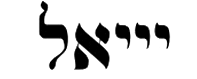
Yeyay'el
«I see how others look, and I look beyond»
Yeyay'el represents a way of seeing that notices how others look. You do not only notice a face, a place or an opportunity: you can also grasp the expectations, limits and habits through which they are interpreted. Your gift is to make visible something that was already there but that nobody had yet brought into focus.
This talent concerns every field where attention is attracted, directed or educated. You can communicate an idea, create an image, recognise a work opportunity or help someone understand a situation better. Showing something and showing yourself are two parts of the same movement: a discovery gains strength when you agree to bring it before others.
The first obstacle is narcissism, understood as excessive fascination with your own image and way of feeling. Self-analysis can absorb your whole capacity for observation. Every detail of yourself becomes interesting, while what happens outside fades into the background. Marcel Proust represents the possibility of turning observation of your own way of seeing into a work of art. But without a form to build, that same movement may become simply endless time devoted to yourself.
The second obstacle is the fear of going far. The relationship between self-image and fear of distance brings this portrait close to Damabiyah, February's angel 65. When you turn your eyes towards the world, you can quickly sense what others consider possible and see a route beyond that limit. You may stop at precisely that point. Discovery attracts and frightens you at once, because it involves losing the familiar image that makes you feel secure. Even success can be frightening when it promises a life you do not yet know how to live.
John Calvin appears in this portrait through the relationship between predestination and limits to freedom. This reference shows the risk of making rigid what you could explore: seeking a reassuring rule at precisely the moment when you need to accept a new possibility.
If you give up, you may adapt to an environment that is too confining and let others decide how far you are allowed to go. You may also use those constraints to keep telling yourself that you are a dreamer held back. It then becomes difficult to distinguish real pressure from fear of setting out. Recognising this difference lets you seek help where needed and take responsibility for the part of the choice that belongs to you.
You also need trust in qualities you have not yet had the chance to discover. Not everything can be tested before you begin. Forrest Gump, played by Tom Hanks, evokes openness to the journey and its encounters without needing to control every development in advance. Pablo Neruda brings the connection between poetry, boldness and distance into this portrait.
This openness does not require recklessness. You can prepare a step and then take it, allowing experience to teach you something analysis cannot foresee. Quick intuition, originality and inventiveness need a moment when you stop holding yourself back.
Pissarro and De Chirico evoke new ways of helping people see; Giorgio Armani, invention applied to image and business. J.D. Rockefeller represents recognising and showing investment possibilities. These are examples of different fields in which a way of seeing becomes a shared project, not promises of financial success.
In relationships, judging others harshly can be a defence against curiosity. If you immediately consider them limited or unworthy, you do not have to risk an encounter. Growth means beginning to observe again without feeling you are already an expert: using memory and sensitivity to learn, rather than confirming a fixed image of yourself and the world.