
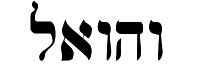
Angel no. 49
Wehewu'el
«My energy is stopped and hidden on every side»
Wehewu'el accompanies the period from 23 to 27 November and belongs to the Principalities. The motto «My energy is stopped and hidden on every side» describes an inner wealth you often choose to protect behind a diminished image of yourself.
Your gift is a clear understanding of people and the values that guide shared life. You can observe political, social and moral dynamics, recognise contradictions and devote yourself to a deep search for meaning. You can feel comfortable alone, meditating or studying, without needing to fill every silence.
The same letters as Wehewuyah symbolically evoke a centre enclosed between two limits. The two portraits differ in their relationship to them: Wehewuyah seeks the great challenge to face, while you may turn the boundary into a tower from which to observe and guard what you consider precious.
The main obstacle is a sense of superiority fed by disappointment. You may have encountered vulgarity, pettiness or misunderstanding and come to see them as the only truth about others. You then hide your best qualities, show a mediocre or distracted side and let even your family know only that mask.
This reserve does not always amount to modesty. It may contain the judgement that others do not deserve to encounter what you know and feel. Every new disappointment confirms the distance, while an interesting quality risks passing unnoticed. In protecting your treasures, you end up reducing the opportunities for exchange that might surprise you too.
Animals and children may make trust easier for you. In them, you seek a relationship less marked by conventions and self-interest. You may show tenderness, imagination and humour that you offer adults more cautiously. A useful step is to bring a little of this openness into relationships between equals too, choosing actual people instead of judging an entire category.
Harpo Marx evokes comedy that mocks adult seriousness through his silent character. Carlo Collodi, with Pinocchio, brings childhood as a place of exploration and invention. Charles M. Schulz creates a child-centred space in Peanuts, while Laurence Sterne, in Tristram Shandy, dismantles linear biography and expands childhood. These are ways of expressing an original outlook by sharing it with those who can recognise it.
One important ability of yours is to console. You can offer words, presence or images that help someone make anger, resentment, regret and remorse feel less absolute. Your clarity can restore perspective precisely because it sees more than guilt or defeat. This quality takes form when you agree to speak, confide and participate as well as observe.
If you close off every exchange, the emotions you could understand in others may remain voiceless within you too. An activity chosen solely to avoid exposure may leave you feeling that you do not use what you possess. You can open a small passage: a project, an honest conversation, a shared responsibility.
An ideal can make this gesture more natural. Spinoza, John XXIII and Sai Baba appear as people guided by a mission; what they share is a purpose that leads beyond inner shelter alone. Pinochet and Napoleon Duarte, in contrast, appear on the darker side of detachment that hardens in the exercise of power.
Your direction is to preserve depth without closing the door. You can retain discernment and boundaries while recognising that an authentic relationship also requires a visible contribution from you. Sharing what matters allows you to encounter a world less uniform than disappointment had made it seem.